
Spanflug’s contribution to the circular economy
As a partner in the CICAM project, Spanflug helped develop a calculation model for hybrid manufacturing: reliable cost prediction for parts built with WAAM and CNC.
How precise costing for hybrid manufacturing supports circular economy
This summer, the CICAM research project (Computational Intelligence for Computer-aided Manufacturing) came to a successful close after more than three and a half years of intense collaboration. Its goal was to make it possible to cost a demanding but more sustainable form of parts production: hybrid manufacturing, where a part is first built up additively and then CNC machined to meet the target surface quality requirements.
Image: CICAM project, iwb / Technical University of Munich (TUM)
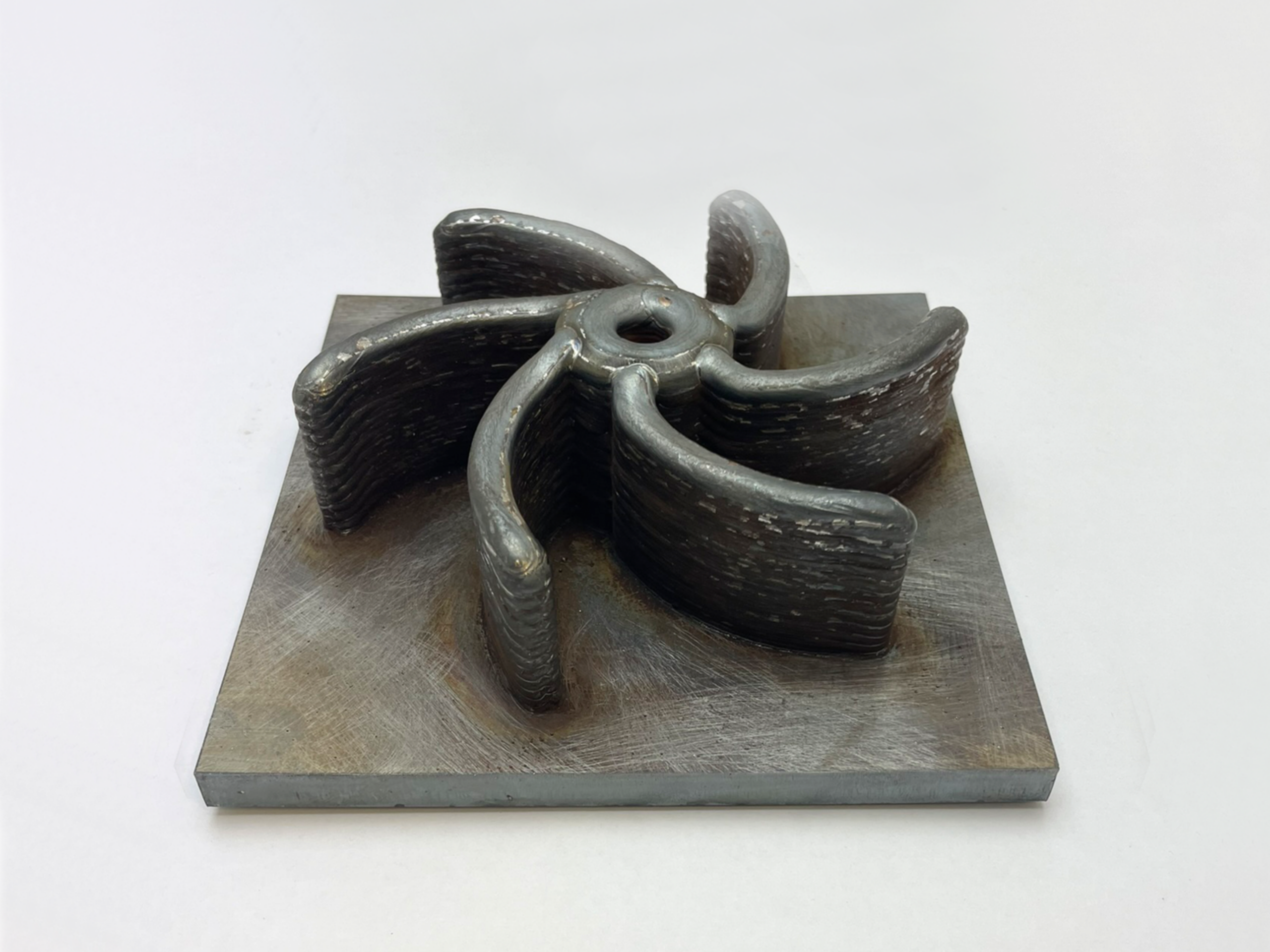
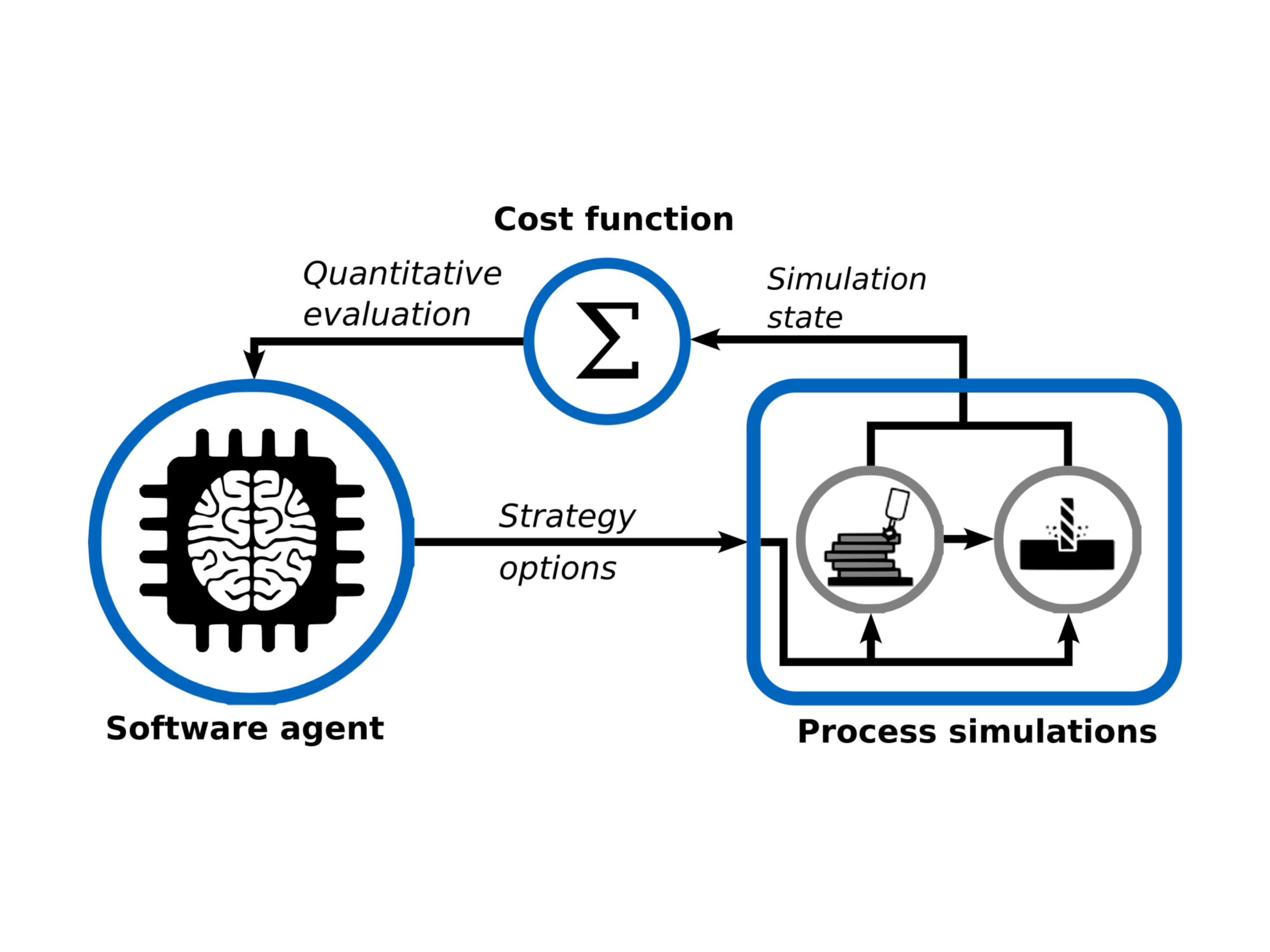
Within the consortium, Spanflug took on one decisive question: what would such a part cost? Analyzing parts from their 3D model and calculating their manufacturing cost, time and effort is Spanflug’s field of expertise, and it defined their role in the project. Together with the partners, a software framework was developed, in which an AI-powered virtual agent uses existing process simulations to find the best manufacturing strategy and select the right process parameters.
The industry impact: only when the cost of a hybrid part is known in advance can manufacturers see whether this approach really is the most economical one, and choose the process that uses less material and takes less time. That is the promise of hybrid manufacturing, made tangible: parts produced at lower cost, with far less wasted raw material, making manufacturing more sustainable as a result.
WAAM as the basis for hybrid manufacturing
Most machined parts begin as a solid block of material. For many geometries, a significant share of it is removed during milling. Wire arc additive manufacturing (WAAM) follows the opposite principle: a part is built-up layer by layer, adding only the material required and close to the final contour.
Both research and industry follow the process with strong interest, thanks to a few key advantages:
- Lower material use: less raw material is needed, which saves cost, particularly for materials that are expensive or hard to get, such as rare metals or metals with difficult supply chains.
- Flexibility: the process can make new parts, but it can also repair or modify existing ones.
These strengths make WAAM valuable across many industries, from aerospace and automotive to energy and general manufacturing. Typical use cases include:
- large structural parts, like turbine parts;
- the repair or modification of existing parts;
- prototypes and small production runs;
- and specialized or hard-to-source parts.
Why the costs are hard to calculate
WAAM parts have a low surface quality. To achieve the quality of the finished part requirement, a machining step, typically milling, is required. It is the combination of both processes that adds complexity, both to upfront costing and to manufacturing itself. Because the additive build-up and the subsequent machining depend on one another, CAM-planning the entire path to the finished part becomes considerably more complex. Furthermore, suitable manufacturing parameter sets that jointly ensure efficient manufacturing of the target geometry and compliance with the required quality constraints have to be identified.
Image: Impeller in the Spanflug 3D Viewer: the WAAM near-net-shape geometry (outer, blue) and the target geometry achieved by milling. Source: Spanflug
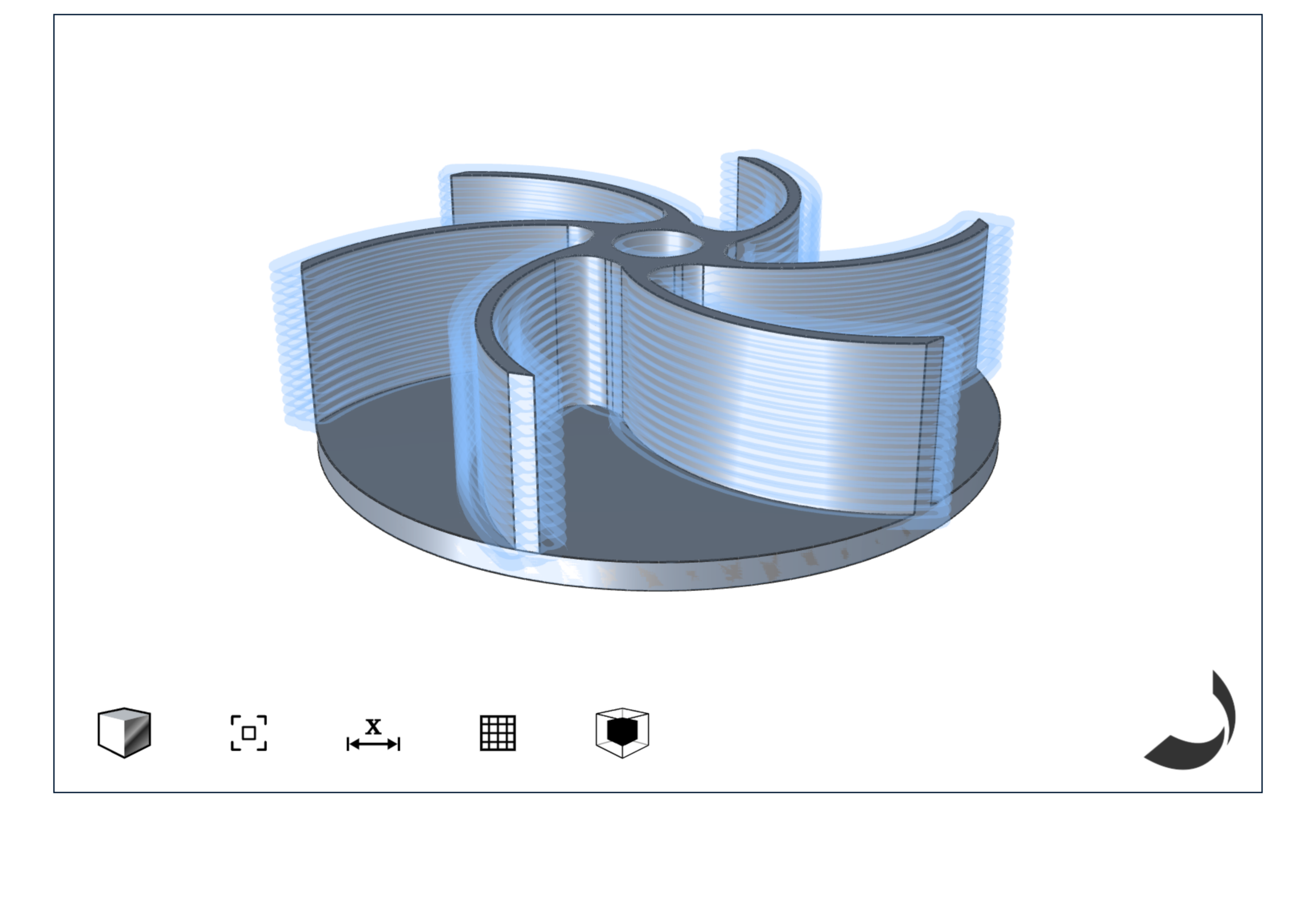
Without a reliable prediction of what a given combination costs, it is not possible to identify the most efficient approach or assess the viability of the hybrid route. A central objective of CICAM was to establish the basis for a hybrid manufacturing cost prediction model. Spanflug took over responsibility for this task.
Image: The hybrid process chain at a glance: a part is first built up with WAAM and then machined to its final quality. Source: CICAM project description, iwb / Technical University of Munich (TUM)
Reliable costing for the hybrid part
Spanflug has many years of experience in determining manufacturing times and costs for metal parts based on 3D models. Within CICAM, the technology company examined how this expertise, developed for conventional CNC machining, could be extended to additive as well as hybrid manufacturing, and what would be required to make the algorithms applicable to these new process chains.
Spanflug’s contribution covered the entire path of a hybrid part, looking at the cost of the additive build-up with WAAM as well as the cost of machining the near-net-shape semi-finished product. The result is a prediction model capable of assigning reliable costs to a process that combines an additive process and machining, while taking the interdependencies between the individual process steps into account. It provides the basis on which the value of a hybrid approach can be assessed for a specific part.
Analyzing a part and calculating its cost is what Spanflug’s algorithms are built for, and hybrid parts are a new and demanding case of exactly that task. CICAM confirmed the near-net-shape capabilities the Spanflug platform already offers today and showed which capabilities such cases will require in the future.
A consortium effort
CICAM combined complementary competencies of the project partners. The project was led by the Institute for Machine Tools and Industrial Management (iwb) at the Technical University of Munich (TUM). OPEN MIND Technologies, developer of the innovative CAD/CAM solution hyperMILL, provided the process simulations for both the WAAM build-up and the machining forces. Spanflug contributed the analysis and calculation that translates a proposed process into a solid basis for a business decision.
Together, these contributions make hybrid manufacturing a real business decision, not just a technical option. Its costs, time, material use, and quality can now be assessed before a single part is made. Precise calculation is therefore not an academic exercise, but the basis for efficient and resource saving manufacturing.
CICAM ran from the beginning of 2023 to June 2026 and was funded by the Bavarian Joint Research Program (BayVFP) of the Bavarian State Ministry of Economic Affairs, Regional Development and Energy, supervised by VDI/VDE Innovation + Technology GmbH.
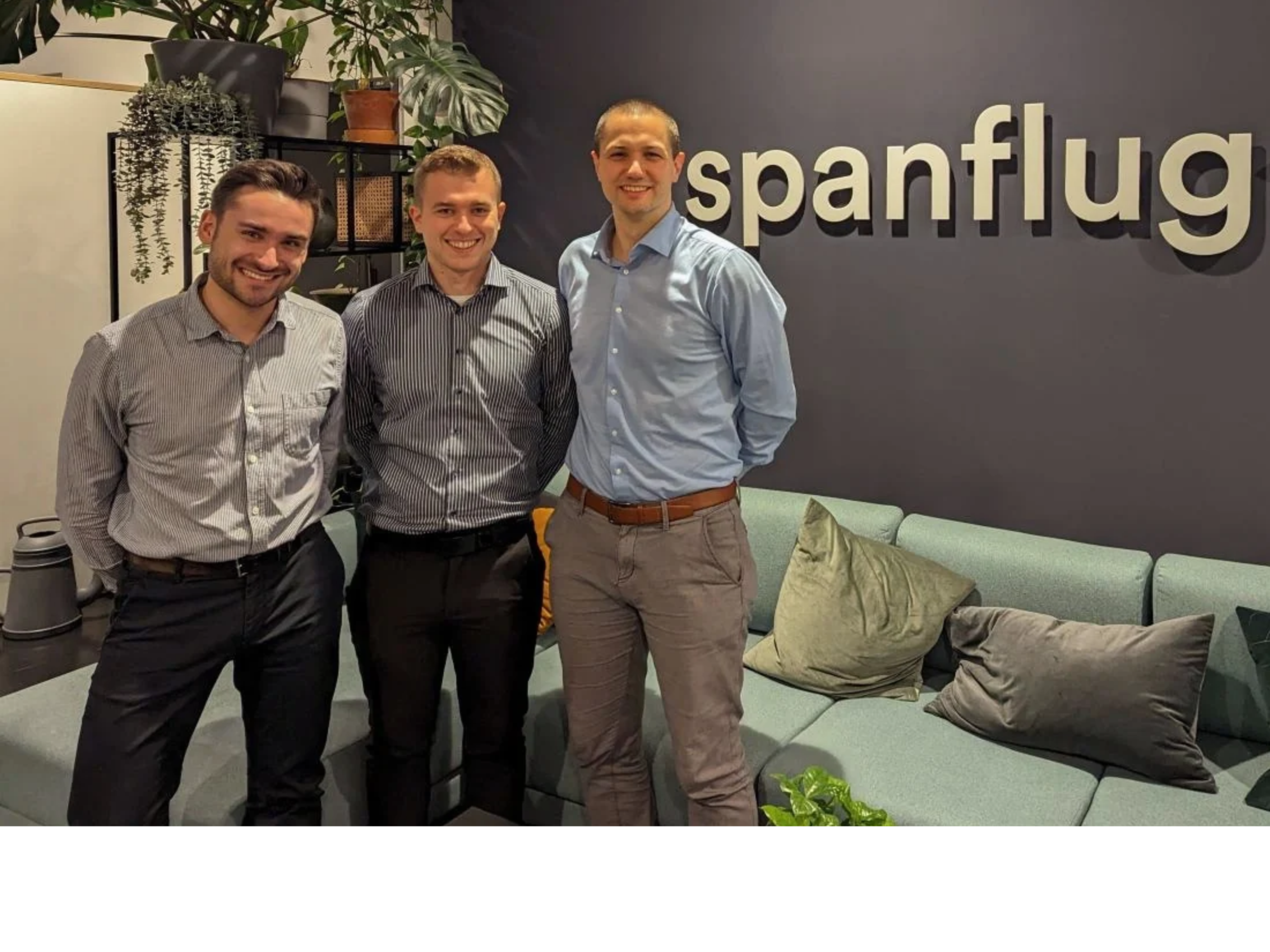
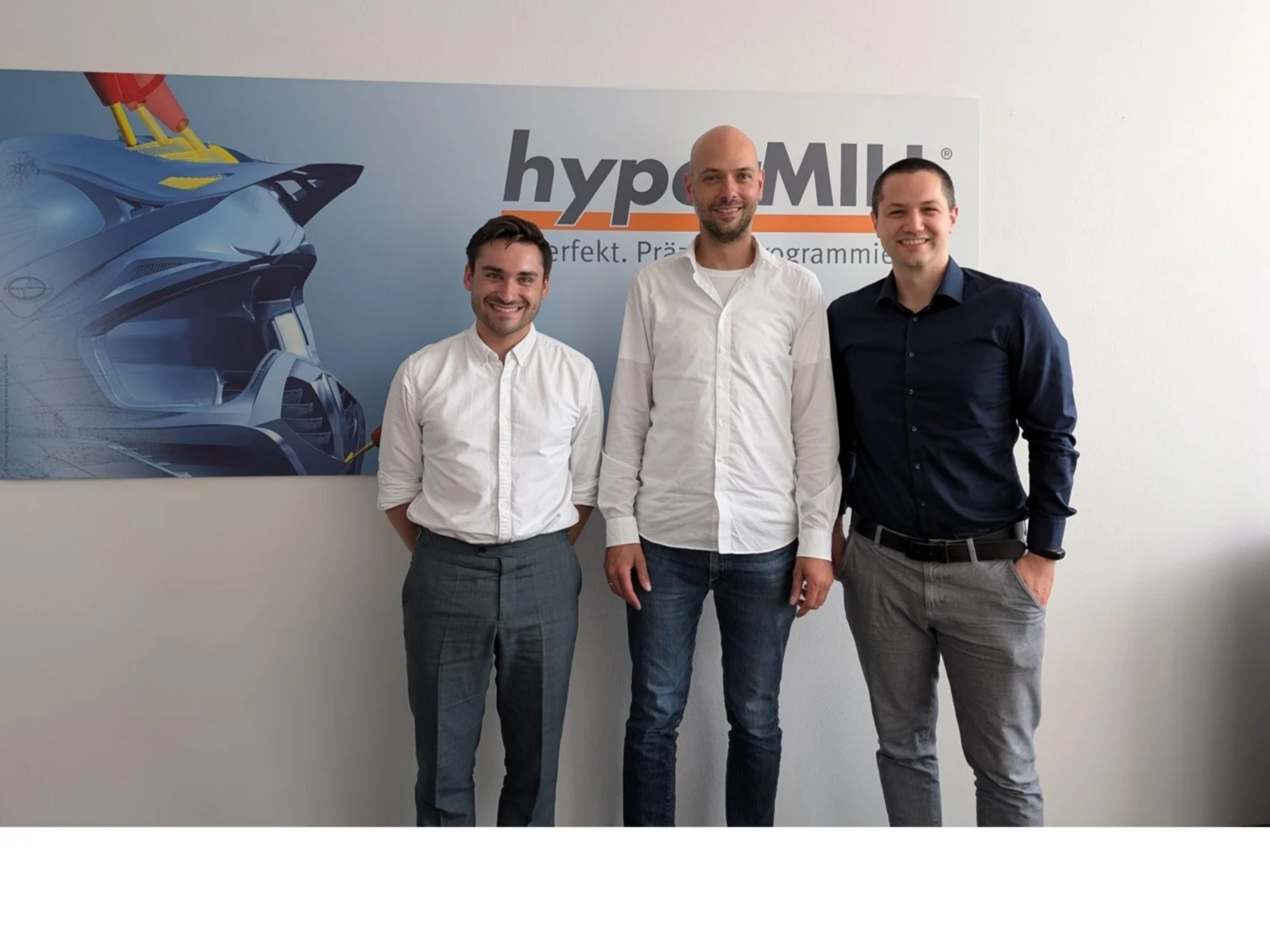
Throughout the project, the partners met regularly for joint working sessions, here team members during a meeting at OPEN MIND and at the Spanflug office in Munich. Source: OPEN MIND, Spanflug.